
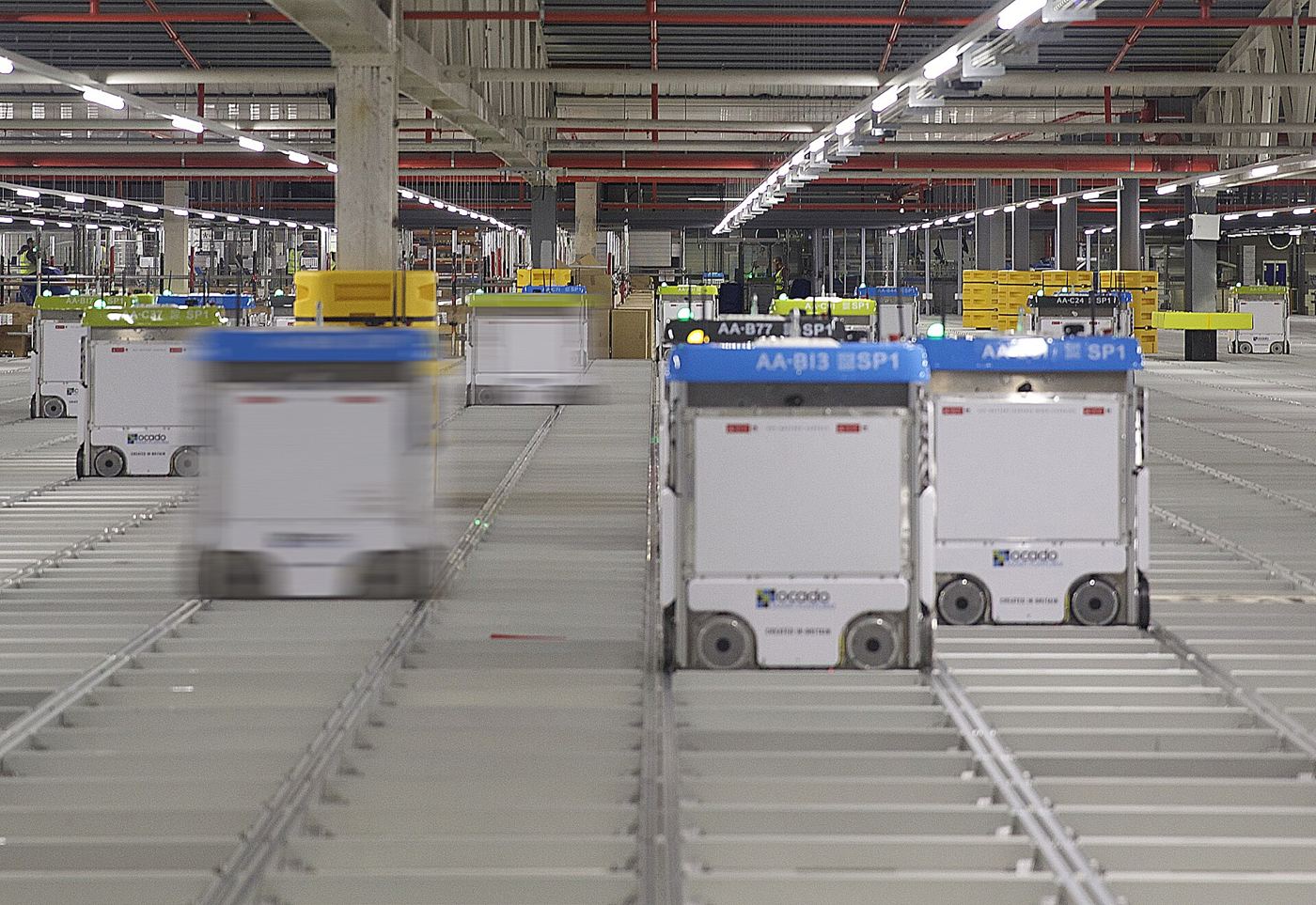

In a modern warehouse, the shelves come to the workers. Small robots glide across the floor, sliding under racks of goods, lifting them and carrying them to a packing station where a human picks the items for an order. The system turns the traditional warehouse inside out: instead of people walking kilometres between shelves, the robots do the travelling, and people stay in one place doing the skilled work of picking and checking. The change has made order fulfilment far faster, which matters as online shopping grows and customers expect deliveries within a day or two. Warehouse operators say the robots also reduce injuries, since staff no longer push heavy trolleys or climb ladders to reach high shelves. The robots navigate by following markers on the floor and by communicating with a central system that plans their routes to avoid collisions and keep the busiest items closest to the packing stations. The robots work day and night, stopping only to recharge or for scheduled maintenance.
What the Evidence Shows
Running a robot warehouse takes careful planning and constant maintenance. The fleet must be charged, cleaned and repaired, and the software that directs them needs updating as the range of products changes. Human workers have had to learn new skills, from supervising the robots to handling the exceptions they cannot, such as damaged packaging or unusual items. Some workers worry about jobs, and warehouse operators acknowledge that the number of walking and lifting roles has fallen, while roles in robot maintenance and supervision have grown. Smaller businesses are beginning to use simpler versions of the technology, renting robots rather than buying them, or using them only in the busiest parts of the warehouse. Industry watchers say the next step is robots that can pick items themselves, a much harder task that requires delicate gripping and judgement. For now, the partnership between moving shelves and stationary people is proving to be one of the most effective uses of automation in logistics. Reporting and analysis from sources such as MIT Technology Review track the same developments, and specialists following the shelf-moving warehouse robots say the direction is now consistent across independent lines of evidence.
The Wider Context
The wider context is an industry learning to ship capability and restraint together. Products built around the shelf-moving warehouse robots now launch with safety evaluations, usage data and rollback plans as standard, because enterprise buyers and regulators ask for them in the first meeting. Companies that treated those questions as friction are discovering they have become the purchase criteria.
What Happens Next
What happens next for the shelf-moving warehouse robots depends less on another breakthrough than on the unglamorous work of reliability, pricing and support. The buyers evaluating it now are not enthusiasts; they are operators with budgets and auditors, and their checklists will decide the timeline. On the evidence of the current pilots, the technology has earned the right to be judged by them. You can follow related developments in our coverage of technology.
There is a practical lesson in all of this for readers deciding what to do today. Start with the verified facts, be wary of anyone promising certainty, and prefer reversible steps while the evidence is still developing. Circumstances differ by country, income and personal situation, so general guidance should always be weighed against your own context before you act on it in any significant or lasting way.