
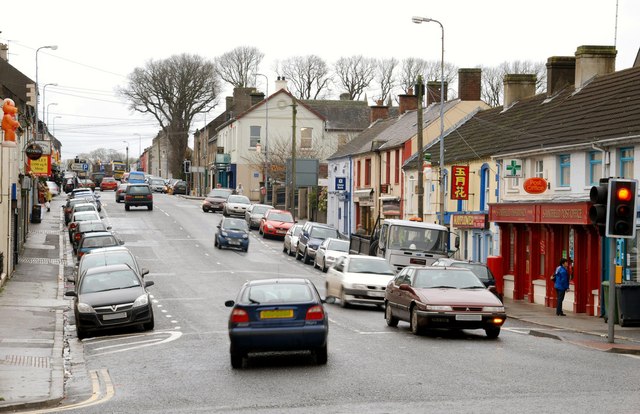

For years, the story of local news was a story of loss: closed titles, merged newsrooms and towns left without anyone to report the council meeting or the school board decision. That story is not over, but a quieter one has joined it. Local news is rebuilding from the ground up, in community newsrooms, non-profit start-ups and one-person operations that look very different from the papers they replace.
The rebuild starts from a clear-eyed view of what was lost. When a town loses its reporter, it loses scrutiny, and research in several countries has linked news deserts with lower civic participation and higher public spending left unexamined. It also loses the everyday record: the sports results, the planning notices, the obituaries and celebrations that tell a community who it is. Our news coverage returns to this theme often, because the rebuilding is now producing results worth reporting.
New models for an old job
Nobody has found a single replacement for the advertising that once paid for local reporting, so the new sector runs on mixtures. Membership and subscriptions provide a base in some towns. Philanthropy and grants fund specific beats, such as education or the environment. Local businesses sponsor newsletters they could never have afforded in print. Public funding helps in a few places, guarded by rules designed to protect editorial independence. The mixture is untidy, but it has one virtue the old model lacked: no single funder can sink the whole enterprise.
Technology has lowered the cost of starting, if not of sustaining. A reporter with a laptop, a newsletter platform and a phone can publish to a whole town. Audio and video, once expensive, are now ordinary tools. What remains expensive is time: attending the meeting, checking the document, knocking on the door. Successful new outlets are honest about this, asking readers to pay for presence rather than for content in the abstract.
Trust is the local advantage
National media competes on scale; local media competes on trust. The reporter is visible at the school gate and answerable at the shops, and errors are corrected in front of neighbours. That closeness disciplines journalism in a healthy way. It also opens the door to collaboration: readers supply tips, photographs and documents, and community boards help set the agenda at public meetings. Reporting by BBC News on community journalism in the United Kingdom and elsewhere has found audiences responding strongly to outlets that treat them as participants rather than consumers.
There are limits to celebrate honestly. Many new outlets are fragile, dependent on a founder’s energy and a grant cycle. Coverage is uneven, flourishing in prosperous towns while poorer areas, which often need scrutiny most, struggle to sustain it. Experienced journalists worry, fairly, about training and legal support for newcomers working alone. These are arguments for building shared infrastructure, from libel insurance pools to mentoring networks, not for nostalgia.
What rebuilding really requires
The encouraging sign is that the rebuilding has stopped being a handful of experiments. Training programmes now teach the business of local news alongside reporting. Universities partner with community outlets. Established publishers, having closed titles for a decade, are selectively reopening coverage where digital subscriptions make the numbers work.
The workforce is changing with the models. New outlets hire reporters who can also shoot video, read a dataset and write a membership appeal, and they train local people rather than importing all their staff. Apprenticeships aimed at school leavers without degrees are widening the profession in towns the industry abandoned. Pay remains modest and careers uncertain, but the journalists doing this work describe a satisfaction the old industry struggled to offer: their readers know their names, and the impact of a story can be seen at the next council meeting, not guessed at from anonymous traffic figures.
Local news will not return to its old form, and it does not need to. What a community needs is simpler and harder: someone whose job is to watch, to ask and to publish, reliably and independently. From the ground up is exactly how that is being rebuilt, town by town, list by list, reader by reader.