
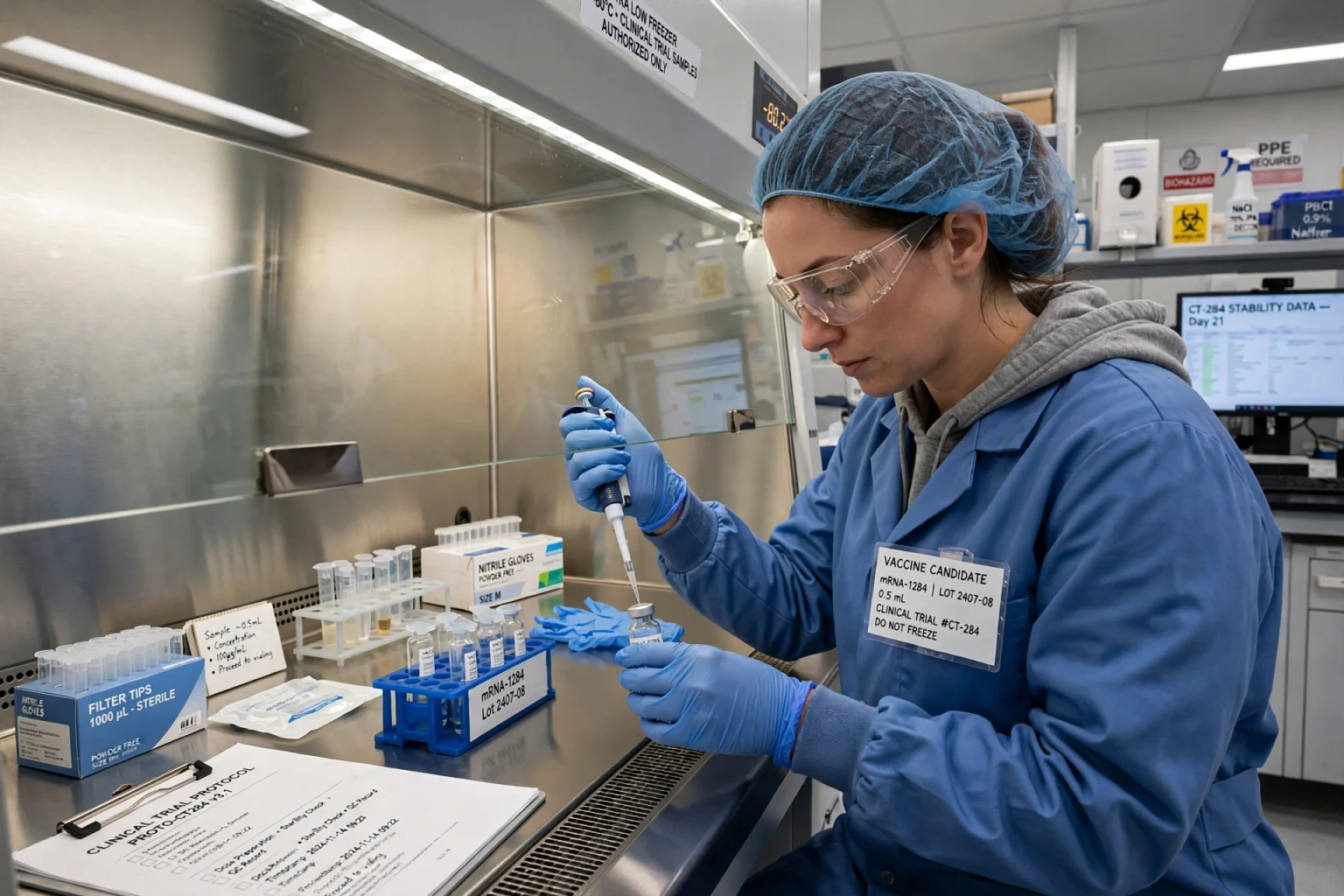

A personalised vaccine for ovarian cancer has passed its first clinical test, researchers have reported, in a development that specialists describe as encouraging but strictly preliminary. The phase 1 trial, published in Nature Medicine, found that the vaccine NeoVax, given with the immunotherapy drug nivolumab, could be manufactured and administered successfully and had an acceptable safety profile.
The study involved patients with platinum-sensitive ovarian cancer — disease that had responded to platinum-based chemotherapy. Phase 1 trials are not designed to show that a treatment works, and the researchers make no such claim; their purpose is to establish safety and practicality ahead of larger studies.
Tailored to each tumour
NeoVax is built around neoantigens, protein fragments produced by the mutations inside an individual tumour. Scientists sequenced each patient’s cancer, predicted which fragments the immune system would most readily recognise, and manufactured a vaccine containing up to 20 of them.
Nivolumab, a checkpoint inhibitor already used in several cancers, was added to help sustain the immune response. Laboratory tests during the trial suggested patients’ immune systems reacted to the vaccine’s targets, an early indication that the strategy engages the biology it aims to engage.
A hard disease, a careful claim
Ovarian cancer remains one of the more difficult cancers to treat. It is often detected late, and recurrence after chemotherapy is common even among patients who initially respond well. That record explains both the appetite for new approaches and the discipline with which claims about them should be read.
The same discipline applies across the research landscape this newspaper covers, from clinical trials to AI data centre spending outpacing expected revenue: early numbers, honestly labelled, are the raw material of later certainty.
The road from phase 1
Before any patient could benefit outside a trial, the vaccine combination must succeed in randomised studies comparing it with standard approaches, with outcomes tracked over years. Manufacturing a unique vaccine for every patient also poses cost and capacity questions that the field has yet to answer.
For now, the result is best summarised in the researchers’ own measured terms: the approach is feasible, its safety profile is acceptable, and further testing is warranted. In the long pipeline of cancer research, that is what progress at this stage looks like.
Reaction from the wider field
Specialists not involved in the trial have responded in the measured register that phase 1 results properly invite. The consensus view is that the study strengthens the case for personalised vaccination as a platform — demonstrating, in ovarian cancer specifically, that bespoke manufacture and combination with a checkpoint inhibitor can be accomplished in practice — while leaving every question of patient benefit open.
Attention is already turning to the design of the follow-up work. A persuasive next trial will need enough patients to detect a realistic effect on recurrence, a control group receiving standard care, and follow-up long enough for differences to emerge. It will also need to report manufacturing performance transparently: how many patients’ vaccines were completed, how long production took, and whether delays affected anyone’s treatment.
Patient organisations, for their part, tend to welcome feasibility results while warning against both hype and despair. A phase 1 success is not a treatment, but neither is it nothing: it is evidence that a new idea survived contact with the realities of the clinic. For a cancer in which genuinely new ideas have been scarce, that survival — documented, peer-reviewed and published — is the news.
Editors and reporters covering studies of this kind carry a responsibility of their own: to carry the caveats with the headline. This newspaper’s account has therefore stated the trial’s limits as plainly as its findings, because experience shows that inflated early claims damage the credibility of the genuine advances that follow. If NeoVax or its successors eventually prove their worth in large trials, the record will show that the first reports were measured — and that the measurement, in the end, was warranted by the evidence.