

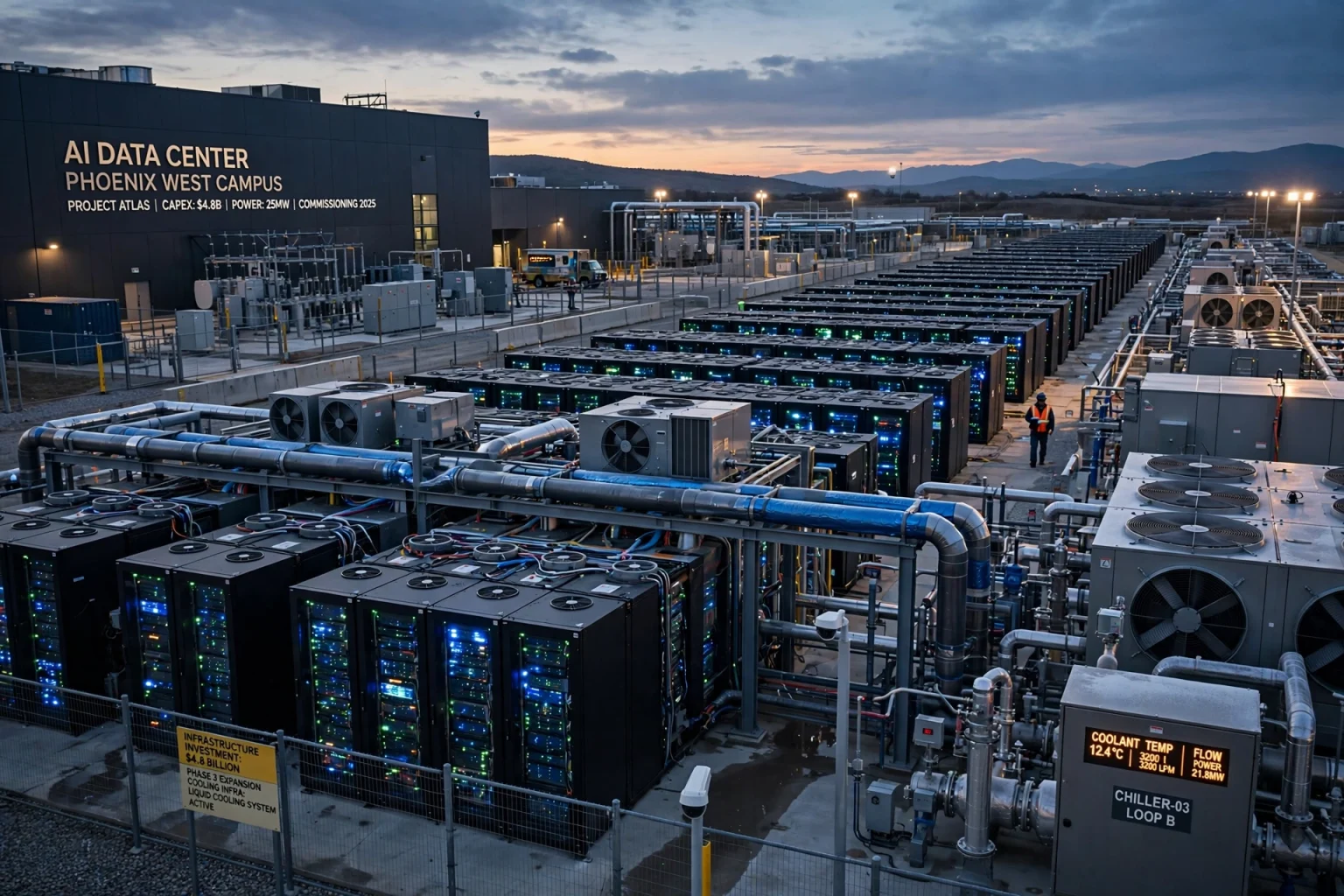

The race to build artificial intelligence infrastructure is moving faster than the revenue meant to pay for it, according to a growing chorus of analysts examining the industry’s spending plans. New reporting highlighted by The Register suggests that forecast capital spending on data centres, chips and power could outstrip the income the sector expects to generate from AI products in the near term.
The warning does not mean the investment is pointless. It does mean the timeline matters. Companies are building today for demand they believe will arrive tomorrow, and the gap between those two points is where investors, workers and communities will feel the pressure first.
Why the Numbers Are Drawing Scrutiny
Modern AI models require enormous computing power to train and run. That power lives in vast data centres filled with specialised processors, advanced cooling systems and dedicated energy supplies. Each new facility can cost billions, and the largest technology firms have announced spending programmes that, combined, run into the hundreds of billions over just a few years.
Against that outlay, revenue from subscriptions, cloud AI services and enterprise contracts is growing, but from a much smaller base. Analysts asking whether the maths adds up are not questioning whether AI is useful. They are questioning how quickly usefulness turns into cash, and whether every planned facility will be fully used when it opens.
Our technology coverage, including this guide to recognising suspicious messages, shows how quickly AI-driven tools, and the scams built around them, are already reaching ordinary users. Demand is real. The open question is its pace.
Power, Land and Water Are Part of the Equation
Money is not the only constraint. Data centres need reliable electricity in very large quantities, and in several regions the queue for grid connections now stretches for years. Communities have begun asking harder questions about land use, water consumption for cooling, and whether promised jobs justify long-term resource commitments.
Those local debates are increasingly shaping where facilities get built. Some operators are turning to new cooling designs, on-site generation and locations near underused power capacity. Others are spreading smaller sites across regions rather than concentrating everything in a handful of mega-campuses. Each choice changes the economics, and each delay adds cost to projects already working to tight schedules.
What Happens If Revenue Arrives Late?
If AI revenue grows more slowly than expected, the likely result is not a sudden collapse, but a period of adjustment. Projects could be phased more slowly, older facilities kept in service longer, and spending shifted toward the most profitable services. Smaller firms that depend on renting capacity from the giants could actually benefit if surplus capacity pushes prices down.
There is also a historical parallel worth noting. Earlier infrastructure booms, from railways to fibre-optic networks, often looked overbuilt in their early years and indispensable a decade later. Capacity that seems excessive today can become the foundation for services nobody has yet imagined. That long view is precisely what the biggest spenders say they are buying.
What to Watch Next
For readers following this story, three signals matter most. First, watch quarterly earnings for clear figures on AI revenue, not just AI spending. Second, watch power agreements and planning decisions, which reveal which projects are truly moving ahead. Third, watch pricing. If capable AI tools keep getting cheaper for businesses and consumers, adoption is probably keeping pace with the build-out.
The AI build-out is one of the largest infrastructure programmes in modern business history. Whether it is remembered as visionary or excessive will depend less on this year’s headlines, and more on how honestly the industry matches its building to real demand over the next few years.
Workers in the technology sector are watching the same numbers closely. A rapid build-out creates jobs in construction, engineering and operations, while intense competition for a limited pool of specialists pushes wages and training programmes upward. If spending cools, hiring plans built around those facilities will be among the first things to change, making this a labour story as much as a finance story for many regions hoping to host the next wave of sites.